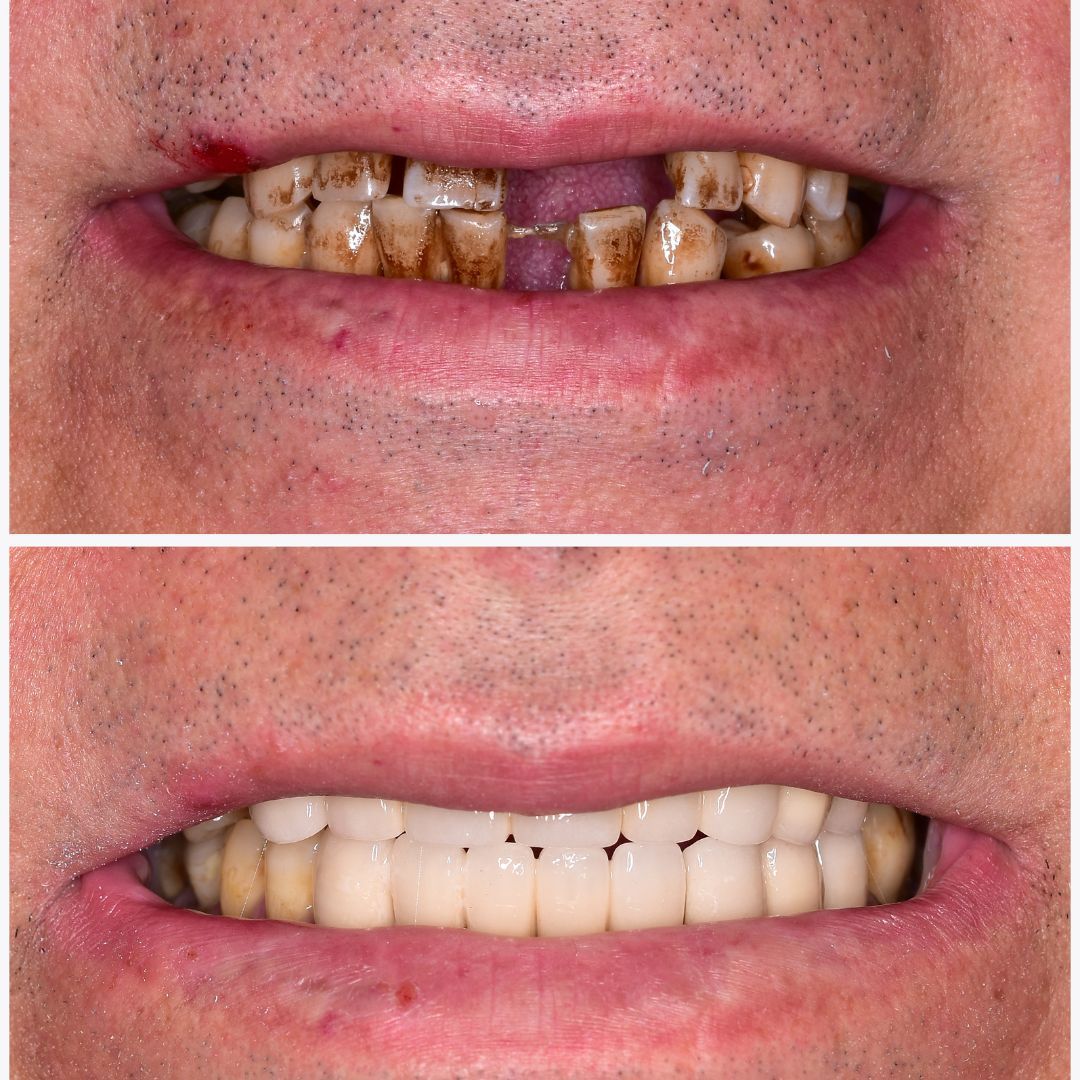
Can You Get a Dental Implant After a Tooth Has Been Missing for Years?
Yes, getting a dental implant years after tooth loss may still be possible, even if the tooth has been missing for a decade or longer. The deciding factors are the condition of your jawbone, gum health, nearby teeth, and overall health, rather than simply how much time has passed.
When a tooth remains missing for years, the jawbone and surrounding teeth can change. Some patients need bone grafting or other preparation before an implant can be placed.
A dental examination and appropriate imaging can help determine whether an implant is suitable and what treatment may involve.
How a long-standing gap can change the mouth
What happens when a tooth has been missing for years?
When a permanent tooth is lost, the jawbone no longer receives the same stimulation from that tooth’s root during chewing.
Over time, the bone that previously supported the tooth may decrease in height or width. Dentists call this process bone resorption.
The amount of bone change varies among individuals. Factors include the original reason for tooth loss, previous gum disease, bone anatomy, and how the area healed.
A long-standing gap can also affect the positions of neighboring and opposing teeth.
These changes do not automatically prevent implant treatment. However, they can make planning more complicated than replacing a recently lost tooth.
Can nearby teeth move into an old gap?
Yes. Teeth beside an empty space may gradually tilt or drift toward the missing tooth.
The tooth directly opposite the gap may also move farther into the space because it no longer contacts its usual chewing partner.
These movements can reduce the available room for a replacement tooth.
They may also change how your upper and lower teeth meet.
For example, a missing lower molar can allow an opposing upper molar to extend downward. This may leave insufficient space for a properly shaped implant crown.
Your dentist evaluates these changes before recommending treatment.
Is it too late to replace a tooth after ten years?
Not necessarily. There is no universal deadline after which dental implant treatment becomes impossible.
Someone who lost a tooth fifteen years ago may still have sufficient bone for an implant. Another person may experience significant bone loss over a shorter period.
The difference depends on individual anatomy and oral health.
The important question is whether the current conditions can support an implant safely and predictably.
If you have lived with an empty space for years, our information about missing teeth concerns explains additional factors worth discussing.
What your dentist evaluates before recommending an implant
What happens during an implant consultation?
An implant consultation begins with understanding your dental history, current concerns, and reasons for considering tooth replacement.
Your dentist examines the missing tooth area, nearby teeth, gums, and bite.
They assess the available space and look for signs of infection, gum disease, or structural problems.
Dental imaging helps evaluate the underlying bone and surrounding anatomy.
Depending on the situation, three-dimensional imaging may be recommended to assess bone dimensions and important anatomical structures.
The findings help determine whether implant treatment is appropriate or whether additional evaluation is necessary.
What information affects implant candidacy?
Your dentist considers several factors:
- Available jawbone: Whether enough suitable bone remains to support the proposed implant.
- Gum condition: Whether inflammation or periodontal disease requires treatment.
- Nearby teeth: Whether shifting or tilting has reduced the available space.
- Bite alignment: Whether chewing forces can be managed appropriately.
- Medical history: Whether health conditions or medications may affect surgery or healing.
- Patient goals: Whether the proposed restoration meets functional, cosmetic, and maintenance expectations.
No single factor establishes candidacy for every patient.
A treatment plan should consider these findings together rather than focusing only on the missing tooth.
Does age affect whether you can receive an implant?
Age alone does not automatically disqualify an adult from dental implant treatment.
The American Dental Association explains that general health can be more important than chronological age when evaluating implant suitability.
Certain medical conditions, including poorly controlled diabetes, can complicate healing.
Tobacco use may also interfere with healing and affect implant outcomes.
Discuss your medications, medical conditions, and tobacco history honestly with your dentist.
This information helps the dental team assess risks and determine whether medical consultation is appropriate.
Why bone and gum health matter
Does bone loss always prevent a dental implant?
No. Bone loss does not automatically rule out dental implants.
An implant requires an appropriate foundation of jawbone for surgical placement and long-term support.
If the available bone is insufficient, additional procedures may sometimes create more suitable conditions.
However, not every bone deficiency can be corrected predictably.
The amount, location, and quality of remaining bone influence treatment possibilities.
A dentist must assess these factors through clinical examination and appropriate imaging before making a recommendation.
Why does the jawbone shrink after tooth loss?
Natural tooth roots help transmit chewing forces to the surrounding jawbone.
When a tooth is removed, the bone that supported its root begins changing because it no longer performs the same function.
This process often begins after extraction and can continue over time.
The resulting changes may leave a narrower or shorter ridge where the missing tooth once stood.
Bone loss can be particularly important when the gap has remained untreated for several years.
However, elapsed time alone cannot accurately predict how much bone remains.
Can gum disease affect implant treatment?
Yes. Healthy surrounding tissues are important when planning dental implants.
Untreated periodontal disease may cause inflammation and damage supporting bone around natural teeth.
A history of periodontal disease can also increase the need for careful assessment and ongoing maintenance.
Your dentist may recommend periodontal treatment before implant placement.
Good home care and professional monitoring remain important after restoration.
Implants cannot develop cavities like natural teeth, but the surrounding gum and bone tissues can still develop inflammatory problems.
When additional treatment or referral may be considered
Can bone grafting help after long-term tooth loss?
Bone grafting may be considered when the jawbone lacks sufficient dimensions for the proposed implant.
The procedure involves placing graft material in an area where additional bone support is needed.
The goal is to encourage the development or preservation of bone suitable for future treatment.
Not every patient with bone loss requires grafting.
Some patients have enough existing bone, while others need more complex procedures.
Learn more about the purpose and considerations of grafting in our bone grafting information guide.
What if teeth have shifted into the missing space?
If neighboring teeth have moved significantly, the remaining space may be too narrow for an appropriately sized implant restoration.
In certain cases, orthodontic treatment may be considered to improve tooth positions before implant placement.
A dentist may also evaluate whether another restorative design would better suit the available space.
The recommendation depends on the degree of movement, bite relationship, and condition of the surrounding teeth.
When might a specialist become involved?
Complex bone deficiencies, important anatomical structures, or challenging surgical conditions may require specialist evaluation.
An oral surgeon, periodontist, or another appropriately qualified clinician may participate in treatment planning or surgery.
Your restorative dentist may coordinate the different stages of care.
This approach helps ensure that implant placement supports the intended final crown, bridge, or other restoration.
A referral does not necessarily mean implant treatment is impossible. It may provide additional expertise for assessing the available options.
Alternative options if an implant is unsuitable
What if you cannot get a dental implant?
Dental implants are not the only option for replacing a missing tooth.
A fixed dental bridge may replace a tooth by using neighboring teeth for support.
Depending on the bridge design, adjacent teeth may need preparation to hold the restoration.
A removable partial denture is another option when one or several teeth are missing.
It can replace visible tooth structure and help restore certain chewing functions without placing a conventional implant.
However, each treatment has advantages, limitations, and maintenance requirements.
Is leaving the gap untreated an option?
In some situations, a dentist may discuss monitoring an existing gap rather than replacing it immediately.
The decision depends on tooth location, chewing function, neighboring tooth stability, and patient preferences.
Leaving a space untreated may contribute to continued tooth movement or functional difficulties in some patients.
An examination can clarify whether monitoring is reasonable or replacement is advisable.
The goal is to select treatment that addresses your individual needs rather than assuming every missing tooth requires the same solution.
How preparation can change the timeline and estimate
How long does an implant take after years of tooth loss?
There is no fixed timeline for replacing a tooth that has been missing for years.
Treatment duration depends on the examination findings and whether additional procedures are necessary.
Some patients may proceed toward implant placement after the planning stage.
Others require periodontal treatment, bone grafting, orthodontic preparation, or specialist assessment first.
After an implant is placed, the surrounding bone needs time to integrate with its surface.
This healing process is called osseointegration.
The American Dental Association explains that integration can take several months, although treatment sequences vary.
Your dentist can provide a more meaningful estimate after evaluating your specific conditions.
For additional information about surgical and restorative stages, read our implant procedure overview.
Why do treatment estimates vary?
An implant estimate may include several components beyond the implant itself.
These can include diagnostic imaging, surgical placement, additional preparatory procedures, the connecting component, and the final restoration.
The complexity of the missing tooth area also affects planning.
A tooth that has been absent for years may require more preparation than a site with favorable bone and tooth alignment.
Insurance benefits and financial responsibility depend on the patient’s plan and treatment requirements.
Request a written estimate that explains which procedures are included and whether additional costs are possible.
Questions to bring to an implant consultation
What should you ask before making a decision?
An implant consultation is an opportunity to understand your actual treatment options rather than assume that a long-standing gap prevents restoration.
Consider asking the following questions.
1. Do I have enough bone for an implant?
Ask how the dentist will evaluate bone height, width, and nearby anatomy.
2. Would bone grafting be necessary?
Discuss whether preparatory procedures might improve implant suitability and what limitations remain.
3. Have nearby teeth moved?
Ask whether tooth movement or bite changes affect available space.
4. Does my medical history create additional risks?
Review health conditions, medications, tobacco use, and previous dental treatment.
5. How many treatment stages might I need?
Discuss examination, possible preparation, surgical placement, healing, and restoration.
6. What happens if an implant is not recommended?
Ask about bridges, removable appliances, and other appropriate options.
7. What will the estimate include?
Request clarification about diagnostic procedures, potential referrals, restoration costs, and follow-up care.
Clear answers help establish realistic expectations before treatment begins.
Arrange a tooth-replacement assessment
A missing tooth does not automatically become impossible to replace because several years have passed.
The most useful next step is an individualized examination that considers bone support, gum health, available space, and overall oral health.
At Village Smile Care, we help patients in Mount Horeb understand their tooth-replacement options through dental evaluation and coordinated treatment planning.
We can discuss whether implant-supported restoration may be appropriate, what further assessment is needed, and when specialist involvement might be recommended.
If you are considering a dental implant years after tooth loss, visit our dental implant information page to learn more about our approach.
Contact Village Smile Care to arrange a tooth-replacement assessment and discuss the possibilities for your individual situation.