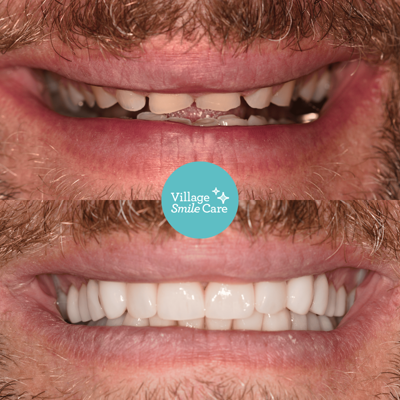
Can You Whiten Your Teeth When You Have a Front-Tooth Crown?
Yes, you can whiten your natural teeth when you have a front-tooth crown, but whitening treatments will not change the crown’s original shade. Because surrounding teeth may become lighter while the crown stays the same color, treatment can create a noticeable mismatch.
A dentist can evaluate your crown, check your oral health, and help plan whitening around your existing restoration. Sometimes the best approach is to whiten first and consider a replacement crown afterward. The right sequence depends on your current shade, cosmetic goals, and whether your crown still functions.
Why natural teeth and crowns respond differently
Can teeth whitening change the color of a dental crown?
Teeth whitening treatments cannot predictably lighten a dental crown. Whitening agents primarily affect pigments within natural tooth enamel and dentin, while restorative materials respond differently.
Most whitening treatments contain hydrogen peroxide or carbamide peroxide. These ingredients penetrate natural tooth structures and help break down compounds responsible for discoloration.
A crown is manufactured from materials such as porcelain, zirconia, or porcelain fused to metal. These materials do not respond to bleaching like natural teeth.
Consequently, whitening may brighten surrounding teeth while leaving the crown’s manufactured shade unchanged.
The American Dental Association confirms that tooth-colored restorations do not whiten like natural teeth.
American Dental Association
Why does crown material matter?
Different crown materials have different optical properties. Their translucency, opacity, and surface finish influence how closely they resemble natural enamel.
Some ceramic crowns allow light to pass through their outer layers, producing a natural appearance.
Others contain more opaque materials that conceal underlying tooth discoloration.
However, translucency does not mean a crown can be chemically whitened.
Your dentist considers these characteristics when evaluating whether the restoration will continue matching surrounding teeth after whitening.
Can whitening toothpaste brighten a crown?
Whitening toothpaste may remove some external staining from natural teeth and certain restoration surfaces.
However, removing surface stains differs from changing the underlying color of a crown.
A crown that appears darker because of coffee or tea deposits might look cleaner after appropriate polishing.
A crown manufactured in a darker shade will not become substantially lighter through toothpaste.
Avoid aggressive abrasive products without dental guidance because repeated abrasion may affect restoration surfaces.
How whitening can reveal a shade mismatch
Why might a front-tooth crown look darker after whitening?
A front-tooth crown can become more noticeable when neighboring natural teeth become lighter.
Before whitening, the crown may match surrounding teeth closely enough that differences are difficult to detect.
After whitening, natural enamel changes shade while the restoration remains relatively unchanged.
This contrast can make the crown appear yellow, gray, or darker, even when its actual color has not changed.
The difference is often especially noticeable when the crown sits between two natural front teeth.
Does every crown become noticeable after whitening?
Not necessarily.
If the crown was originally made slightly lighter than neighboring teeth, whitening may improve the overall match.
A modest whitening change might also leave an acceptable appearance.
Results depend on the original crown shade, surrounding tooth color, whitening response, and lighting conditions.
Some patients notice differences immediately. Others remain satisfied with the appearance of their existing restoration.
A dentist can explain the possibility of a mismatch before treatment begins.
Can you whiten only the teeth beside a crown?
Targeted whitening may be considered in selected situations, but it requires careful planning.
Natural teeth do not always respond evenly to whitening products.
Treating individual teeth without guidance could create additional shade differences instead of improving symmetry.
A dentist may recommend whitening a broader group of visible teeth to establish a more consistent appearance.
The treatment plan should account for existing crowns, veneers, bonding, and fillings within the smile.
What to check before whitening around a crown
Should a dentist examine your crown before whitening?
Yes. An examination helps determine whether your crown and surrounding teeth are healthy enough for cosmetic treatment.
Your dentist evaluates the crown’s margins, surface condition, fit, and relationship with adjacent teeth.
They also check for untreated cavities, gum inflammation, exposed roots, or other concerns that could affect comfort and whitening results.
An existing crown does not automatically prevent whitening. However, problems beneath or around the restoration should be addressed before cosmetic procedures begin.
Can whitening cause sensitivity around a crowned tooth?
Whitening can cause temporary sensitivity in natural teeth. Gum irritation may also occur when whitening gel contacts soft tissues.
A crowned tooth can still have sensitive natural structures beneath or near the restoration.
If the crown has exposed margins, gum recession, or underlying dental problems, discomfort may be more noticeable.
Tell your dentist about previous sensitivity, tooth pain, or discomfort when biting.
These symptoms may require evaluation before whitening.
What if the crown is chipped or loose?
A chipped, loose, or poorly fitting crown should be examined before starting whitening.
Damaged restorations may allow bacteria to accumulate or expose vulnerable tooth surfaces.
Whitening does not repair these problems.
If the crown requires replacement, your dentist may coordinate restorative treatment with your desired whitening outcome.
Planning whitening before a replacement crown
Should you whiten before getting a new front-tooth crown?
Whitening natural teeth before placing a new front-tooth crown is often preferable when a lighter smile is your goal.
The dentist can establish your desired natural tooth shade before selecting the color of the permanent restoration.
This sequence helps reduce the likelihood of placing a crown that looks darker after future whitening.
However, urgent dental problems may require treatment before cosmetic whitening.
A fractured tooth, active infection, or significant decay should not remain untreated simply to complete a whitening schedule.
How long should you wait between whitening and crown placement?
Dentists commonly recommend allowing time after whitening before finalizing a crown’s shade and completing adhesive procedures.
The appropriate waiting period varies depending on the whitening method, tooth response, and planned restorative treatment.
Natural tooth color may change slightly as teeth rehydrate and the initial whitening effect stabilizes.
Recent bleaching can also temporarily interfere with certain bonding procedures.
Your dentist will recommend an interval appropriate for your treatment plan.
How do dentists select the shade of a replacement crown?
Dentists use shade guides, photographs, clinical observations, and sometimes digital color measurement.
They compare the surrounding teeth under suitable lighting while assessing brightness, translucency, and subtle color variations.
Front teeth often have different shades near their edges and gumlines.
Matching these characteristics may produce a more natural appearance than choosing one uniform white shade.
Communication with the dental laboratory is important when creating a visible front-tooth restoration.
When polishing or replacing a restoration may be discussed
Can polishing make an existing crown look whiter?
Professional polishing can sometimes improve a crown’s appearance when external stains have accumulated.
Coffee, tea, tobacco, and certain foods may contribute to surface discoloration over time.
Removing these deposits can restore some of the crown’s original appearance.
However, polishing cannot reliably change the underlying manufactured shade.
Your dentist should evaluate the crown material before choosing an appropriate polishing technique.
When might replacing a crown be considered?
Replacement may be discussed when a crown no longer matches surrounding teeth and the difference significantly affects the patient’s cosmetic goals.
Other reasons include recurrent decay, fractures, poor fit, or compromised restoration margins.
An otherwise healthy, functional crown does not necessarily require replacement because nearby teeth have been whitened.
Replacing a crown involves removing the existing restoration and assessing the underlying tooth.
This procedure carries costs and clinical considerations, so the potential cosmetic improvement should justify treatment.
Are there alternatives to replacing the crown?
Sometimes maintaining the existing crown and choosing a more conservative whitening target provides an acceptable result.
Professional cleaning may also improve surface appearance.
For selected cosmetic concerns, dentists may discuss additional restorative options, although these are not suitable for every crown.
The best choice depends on the condition of the restoration, expected appearance, and how much treatment the patient wants.
Costs and limitations to discuss with your dentist
Does whitening cost more when you have a crown?
Having a front-tooth crown does not automatically increase the cost of whitening.
However, additional treatment may be necessary if the crown creates a noticeable shade mismatch.
Costs depend on the whitening method, required appointments, restoration condition, and whether replacement is planned.
Professional whitening and crown replacement are generally quoted as separate procedures.
Will insurance cover whitening or cosmetic crown replacement?
Dental insurance often excludes elective whitening because it is considered cosmetic treatment.
Coverage for crown replacement varies depending on clinical necessity, benefit restrictions, and the insurance policy.
A replacement performed solely to improve color may not qualify for the same benefits as medically necessary restorative treatment.
Request an itemized estimate before committing to treatment.
Questions about timing and shade selection
Will whitening results last permanently?
No. Whitening results can gradually change because of aging, dietary staining, tobacco exposure, and other factors.
Your crown may maintain its manufactured shade while natural teeth become darker again.
This means the relationship between crown color and surrounding teeth can change over time.
Maintenance whitening may help selected patients, but frequency should follow professional guidance.
What shade should you choose?
The most appropriate shade depends on your natural teeth, facial appearance, preferences, and realistic whitening results.
Extremely bright shades are not always necessary for an attractive, balanced smile.
Discuss whether you prefer subtle improvement or a noticeably lighter appearance.
Your dentist can explain which changes are achievable without unnecessary restorative treatment.
Should whitening happen before a special occasion?
Plan ahead when whitening and crown replacement are both possibilities.
The process may require examinations, whitening appointments, shade stabilization, laboratory fabrication, and final fitting.
Beginning early provides more flexibility if sensitivity develops or adjustments become necessary.
Avoid assuming that both procedures can be completed immediately before an important event.
Plan a coordinated cosmetic consultation
A front-tooth crown should not prevent you from discussing teeth whitening.
At Village Smile Care, we help patients in Mount Horeb understand how whitening may affect the appearance of existing dental restorations.
We evaluate tooth color, crown condition, oral health, and cosmetic preferences before discussing suitable options.
Our goal is to explain realistic results without recommending unnecessary treatment.
Learn more about our teeth whitening services and cosmetic dentistry options.
If you are considering whitening with a visible crown, contact us to arrange a personalized consultation.
Key Takeaways
Whitening can brighten natural teeth, but it cannot predictably lighten a front-tooth crown. That difference makes planning essential, especially when the restoration sits beside visible natural teeth. A dental examination can identify existing color differences, surface stains, sensitivity, and problems that need treatment before bleaching. When a new crown is planned, whitening generally comes first so the final restoration can match the lighter teeth. A sound crown may not need replacement unless its appearance becomes unacceptable. Discuss expected results, timing, maintenance, and costs before choosing your next step over time.