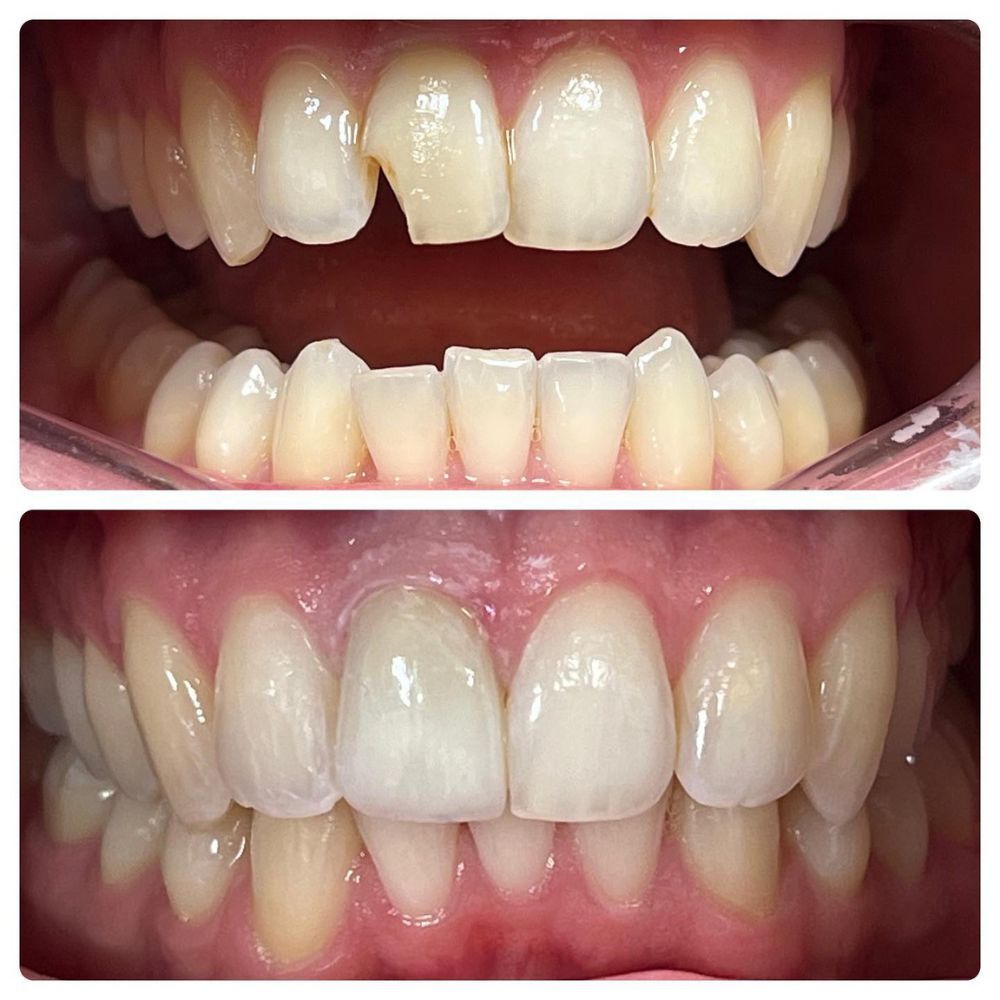
Onlay vs. Crown for a Large Filling: How Dentists Choose
An onlay or crown may be recommended for a large filling when the remaining tooth needs more protection than another filling can provide. Dentists choose between them by examining healthy tooth structure, cracks, decay, and chewing forces.
An onlay protects damaged chewing surfaces while preserving more natural tooth structure. A crown covers most or all of the visible tooth above the gumline when broader protection is necessary.
The right choice depends on the tooth’s condition, not simply the filling’s size. Understanding these differences helps patients discuss treatment options and long-term tooth preservation with their dentist.
Why a large filling may need a different restoration
When does a filling stop providing enough support?
A filling replaces tooth structure lost to decay or damage. Small fillings generally work well when sufficient healthy enamel and dentin remain around the repaired area.
Large fillings create a different concern. As more natural tooth structure disappears, the remaining walls may become thinner and less capable of resisting normal chewing pressure.
A dentist may recommend additional protection when a filling occupies much of the chewing surface or extends between several sides of a tooth.
However, size alone does not automatically require a crown. The condition of the surrounding tooth determines whether a filling, onlay, or crown is appropriate.
Why can an older filling become a problem?
Existing fillings may wear, chip, loosen, or develop gaps along their edges. These changes can allow bacteria and plaque to accumulate near vulnerable tooth surfaces.
Decay may also develop around an older restoration. When treatment requires removing additional tooth structure, simply placing another large filling might not provide sufficient support.
Warning signs can include discomfort when biting, sensitivity, rough edges, or visible fractures.
Some problems produce no noticeable symptoms. Regular examinations help dentists identify changes before significant damage occurs.
Can a large filling remain in place?
Yes. A large filling that remains functional, properly sealed, and surrounded by stable tooth structure may not need replacement.
Dentists consider clinical findings rather than replacing restorations solely because they are old.
The objective is to preserve the tooth while choosing treatment that addresses its actual condition.
How onlays and crowns cover a tooth
What is a dental onlay?
A dental onlay is a custom restoration that replaces damaged portions of a tooth’s chewing surface, including one or more raised chewing points called cusps.
Unlike a conventional filling, an onlay is fabricated to fit the prepared tooth precisely. It may be made from ceramic, composite resin, or other suitable restorative materials.
Onlays preserve healthy tooth structure because they cover only areas requiring restoration or reinforcement.
They are frequently considered when a cavity or existing filling is too extensive for another direct filling, but enough healthy tooth remains for a conservative restoration.
What is a dental crown?
A dental crown is a custom covering placed over a prepared tooth. It restores the tooth’s shape, function, and appearance while protecting weakened areas.
Crowns generally require preparation around the tooth’s circumference. This provides space for the restoration and helps establish an appropriate fit.
A crown may be recommended when damage affects several tooth surfaces or when remaining walls cannot reliably support a more limited restoration.
Is an onlay better than a crown for a large filling?
Neither option is universally better.
An onlay may preserve more tooth structure when damage is limited and the remaining surfaces provide adequate support.
A crown may offer more comprehensive coverage when the tooth has extensive fractures, widespread structural loss, or other significant weaknesses.
The goal is not to select the smallest restoration automatically. Dentists balance tooth preservation with the protection required for dependable function.
What remaining tooth structure tells your dentist
How much healthy tooth must remain for an onlay?
There is no single percentage that determines whether every tooth qualifies for an onlay.
Dentists examine how much healthy enamel and dentin remain, where these tissues are located, and whether they can support a bonded restoration.
Enamel provides a favorable bonding surface for certain restorative materials. Dentin also supports bonding, although its characteristics differ.
The strength, thickness, and location of remaining tooth walls are especially important.
A tooth with substantial healthy structure around the damaged area may be suitable for an onlay. Another tooth with similar filling dimensions might need a crown because its remaining walls are compromised.
Why do tooth walls and cusps matter?
Cusps experience pressure whenever teeth meet during chewing.
When a large filling separates or weakens these structures, repeated biting forces may contribute to cracking or fracture.
Dentists evaluate whether individual cusps require coverage and whether the remaining walls can withstand everyday function.
An onlay can cover selected weakened cusps without necessarily covering the entire tooth.
A crown provides broader coverage when multiple surfaces need reinforcement.
Does tooth location affect the recommendation?
Yes. Molars and premolars perform substantial chewing work, making their biting surfaces important considerations.
Front teeth experience different functional demands and may require other restorative approaches.
Dentists also assess access, moisture control during bonding, existing restorations, and the position of the tooth within the bite.
These findings help determine which restoration offers an appropriate balance of preservation, protection, and function.
How cracks, decay, and bite forces change the decision
Can a cracked tooth receive an onlay?
Some cracked teeth can receive onlays, particularly when the crack is limited and a partial coverage restoration can protect the affected cusp.
However, crack location and depth are critical.
A crack extending beneath the gumline, approaching the root, or affecting the tooth’s internal tissues may require different treatment.
Dentists assess symptoms, clinical findings, and available imaging before recommending restoration.
Neither an onlay nor a crown guarantees that an existing crack will stop progressing.
How does decay influence restoration choice?
Decay must be removed or appropriately managed before the final restoration is placed.
The extent of the resulting defect helps determine whether an onlay provides adequate support.
If extensive decay leaves several weakened walls, a crown may be more appropriate.
Decay extending deeply beneath the gumline can complicate either treatment. Additional procedures may be necessary, and some teeth cannot be predictably restored.
What if you grind your teeth?
Teeth grinding, also called bruxism, increases the forces placed on restorations.
Dentists examine wear patterns, existing fractures, jaw movements, and the way opposing teeth contact one another.
Heavy biting forces may influence restoration design, material selection, and whether broader coverage is advisable.
An onlay may remain suitable for some patients who grind their teeth. Others may benefit from a crown or a protective nightguard.
The decision depends on the individual tooth and the forces it experiences.
Comparing preparation, appointments, and ongoing care
Does an onlay require less tooth preparation?
Onlays generally preserve more natural tooth structure because preparation focuses on damaged areas and surfaces requiring coverage.
Crowns usually require reshaping more surfaces to accommodate a restoration surrounding the tooth.
However, preparation depends on existing damage, material thickness requirements, and the location of restoration margins.
Conservative preparation is valuable, but preserving unsupported or diseased structure does not improve treatment quality.
How many dental appointments are necessary?
Both restorations commonly require an examination, tooth preparation, an impression or digital scan, and final placement.
Laboratory-made restorations typically involve separate preparation and placement appointments.
Some dental practices offer same-day fabrication using appropriate technology. Availability depends on the office and treatment requirements.
Temporary restorations may protect prepared teeth while permanent restorations are manufactured.
During placement, the dentist checks fit, contact with neighboring teeth, bite alignment, and appearance before final bonding or cementation.
How should patients care for either restoration?
Daily brushing with fluoride toothpaste, cleaning between teeth, and attending recommended dental examinations remain essential.
Neither restoration makes a tooth immune to decay. Bacteria can still affect natural tooth structure near restoration margins.
Avoid chewing ice or using teeth to open packaging. Report persistent biting discomfort or unusual sensitivity.
With proper maintenance, both treatments can provide years of service, although individual longevity varies.
What affects the treatment estimate
Why might an onlay and crown have different costs?
Treatment estimates depend on the complexity of preparation, restoration material, laboratory requirements, and additional procedures.
A ceramic onlay is not necessarily less expensive than a crown simply because it covers less tooth structure.
Both may require precise manufacturing, detailed fitting, and specialized bonding procedures.
Cost also depends on whether an existing restoration must be removed, additional decay is present, or a temporary restoration is needed.
Will dental insurance cover an onlay or crown?
Insurance coverage varies by plan, clinical requirements, benefit limitations, and how the procedure is classified.
Some policies apply different reimbursement rules to onlays and crowns. Others consider whether the proposed restoration meets specific coverage criteria.
Before treatment, request a written estimate explaining anticipated insurance benefits and personal responsibility.
Ask whether additional treatment could change the estimate after the existing filling is removed.
A lower initial price should not outweigh clinical suitability. Long-term value depends partly on selecting a restoration appropriate for the tooth.
Questions to ask before replacing a large filling
How can patients make an informed treatment decision?
Understanding why a particular restoration is recommended helps patients compare options without focusing exclusively on cost.
Consider discussing these questions during your examination.
1. Is my existing filling actually failing?
Ask whether the dentist identified recurrent decay, fractures, open margins, or another structural concern. A stable filling may not require replacement simply because it is large.
2. Could an onlay preserve more healthy tooth structure?
Discuss whether the remaining enamel, dentin, and tooth walls could support partial coverage. Ask what clinical findings favor an onlay or crown.
3. Are there cracks that need additional protection?
Ask where any suspected cracks are located and whether they affect the expected treatment outcome. Understand that deeper cracks may require further evaluation.
4. How will the restoration affect my bite?
Discuss grinding, clenching, or discomfort when chewing. These factors may influence material selection and restoration design.
5. What happens if I postpone treatment?
The answer depends on the tooth’s condition. Some restorations can be monitored, while untreated decay or significant fractures may worsen.
6. What maintenance and future costs should I expect?
Ask about hygiene, follow-up visits, possible nightguard recommendations, insurance coverage, and circumstances that could require further treatment.
Should you request a second opinion?
A second opinion can be helpful when treatment options differ significantly or the proposed restoration involves substantial cost.
Request copies of relevant radiographs and discuss the reasoning behind each recommendation.
The appropriate choice should reflect clinical findings, treatment limitations, and informed patient preferences.
Request an evaluation in Mount Horeb
A large filling does not automatically mean your tooth needs a crown. The most appropriate restoration depends on remaining healthy structure, possible cracks, decay, and chewing demands.
At Village Smile Care, we help patients understand their restorative dentistry options through personalized examinations and clear treatment discussions.
If an older filling feels uncomfortable, appears damaged, or raises concerns during a dental examination, we can evaluate the tooth and explain suitable next steps.
Visit our restorative dentistry page or learn about our dental crown services.
We welcome patients seeking guidance at our Mount Horeb dental office. Contact us to arrange an evaluation and discuss which treatment may best preserve your natural tooth.
Key Takeaways
Choosing between an onlay and crown for a large filling requires more than measuring the existing restoration. Dentists evaluate remaining healthy tooth structure, cracks, decay, chewing forces, and the ability to support long-term function. Onlays can preserve more natural tooth structure when adequate support remains. Crowns provide broader coverage for teeth with extensive damage or weakened surfaces. Neither treatment guarantees permanent protection, and both require appropriate maintenance. A thorough dental examination helps identify the most suitable option, clarify treatment costs, and support informed decisions about preserving your natural tooth.